Cactus Line Art: Minimalist Graphics & Illustrations for Real Projects
As a graphic designer who’s built brand identities for handmade businesses, launched seasonal campaigns for boutique retailers, and crafted packaging for small-batch product lines, I approach every design asset with one question: Does this elevate the client’s story—or just fill space? That’s why I recently stress-tested Cactus Line Art across three live projects: an Etsy shop rebrand for a desert-inspired candle line, a printable wall art collection for a creative marketplace seller, and social media graphics for a local plant nursery’s spring workshop series. Here’s what held up—and where it needed thoughtful handling.
A First Impression That Sets the Mood—Not Just the Style
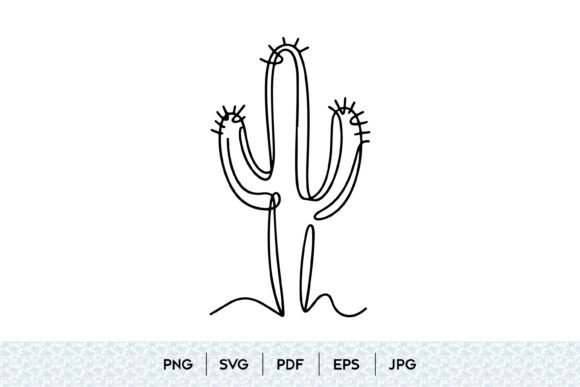
Opening the download folder, I was struck by how Cactus Line Art avoids cliché. It’s not cartoonish or overly stylized—it’s confident in its restraint. The outlines are smooth, rhythmic, and intentionally uneven—like a skilled hand drawing slowly, not a rigid vector snap. That subtle organic variation gives it warmth and authenticity, making it ideal for brands rooted in craft, wellness, or slow living. It reads as botanical illustration, not clipart; minimalist cactus, not generic succulent art. That distinction matters when you’re building visual trust for a handmade business or small business branding.
Where It Shines in Real Client Work
Cactus Line Art excels where personality and cohesion matter most:
- Packaging design: Used on kraft paper labels and matte-finish soap boxes, the line work stayed crisp at 1.5 cm height—no pixelation, no bleeding. Its clean silhouette reinforced the “desert plant” theme without overwhelming product copy.
- Social media graphics: As a recurring accent in Instagram carousels and Pinterest pins, it added thematic continuity without competing with headlines. Paired with a warm sans serif (like Poppins), it felt modern but grounded.
- Printable design & Cricut project: The SVG and EPS files scaled flawlessly for vinyl cutting and sublimation design. On mugs and tote bags, the one-line drawing translated beautifully—no broken paths, no anchor point clutter.
- Brand identity elements: Not as a primary logo (too delicate for standalone impact), but as a supporting brand element—think watermark textures, divider lines in Canva templates, or subtle background repeats in editorial design layouts.
- Product mockups: Dropped into real-world mockups (e.g., ceramic mug, linen tea towel), it enhanced realism—not because it looked “designed,” but because it looked intentionally placed.
Where to Use It With Intention—Not Assumption
This isn’t a universal drop-in asset. In my testing, Cactus Line Art revealed clear boundaries:
- Avoid tight spaces: Below 8 mm in height, detail blurs—especially the tapered tips and subtle curves. It’s not optimized for tiny favicon use or micro-sticker applications.
- Respect contrast: On mid-tone or complex backgrounds (e.g., textured photo overlays), the fine lines risk disappearing. Always test against your final background—light, dark, and in-between.
- Don’t force corporate polish: While elegant, it lacks the geometric precision expected in finance or tech branding. It feels more at home in lifestyle, wellness, or artisanal contexts than in professional corporate materials.
- Watch font pairings: It harmonizes beautifully with humanist sans serifs and soft display fonts—but clashes with sharp, high-contrast serifs or aggressive script fonts. Let it breathe beside type, not compete with it.
Designer Notes You’ll Actually Use
Before committing Cactus Line Art to a client deliverable, I run these checks:
- Test black-and-white output: Print a sample on uncoated paper—does the line weight hold? Does it feel too fragile or unexpectedly bold?
- Preview transparency: The PNG includes alpha channel—verify it renders cleanly over gradients or photos in your editing software (especially in web design or digital ads).
- Inspect vector editability: Open the SVG in Illustrator—can you adjust stroke width, isolate stems, or recolor individual elements? (Spoiler: Yes—clean nodes, no compound paths.)
- Confirm commercial license: This is non-negotiable. For print-on-demand sellers, Etsy product listings, or branded merchandise, verify the license explicitly permits resale and derivative use.
- Compare file formats: Use SVG for web and scalable mockups, PNG for quick social posts, EPS for legacy print workflows, and JPG only when embedding in email templates with strict size limits.
Why It Fits the Creative Marketplace—Without Fading Into the Crowd
In a sea of botanical illustrations, Cactus Line Art stands out by balancing simplicity with character. It doesn’t shout—it invites. That makes it powerful for marketing visuals that prioritize emotional appeal over loudness: think blog headers for plant care guides, invitation suites for desert-wedding brands, or sticker designs for eco-conscious subscription boxes. It supports storytelling rather than interrupting it.
For digital sellers and crafters, it’s a versatile design bundle component—not just a single clipart file, but a system-ready graphic design asset. When layered with texture overlays, paired with neutral palettes, or animated subtly for web design, it becomes part of a larger visual language. And because it ships with five formats—including PDF for easy sharing with printers and collaborators—it removes friction from real-world production.
The Bottom Line for Professional Use
Cactus Line Art isn’t “just another cactus outline.” It’s a considered, production-ready illustration that delivers on mood, scalability, and commercial flexibility—if used with design judgment. It strengthens visual hierarchy when given room to breathe, deepens audience engagement through authentic minimalism, and reinforces brand consistency across touchpoints—from t-shirt design to packaging design to social media graphics. For designers building for real clients—not just aesthetics—the value isn’t in how many files you get, but how reliably each one performs. In that sense, Cactus Line Art earns its place in the working toolkit.