Ornate Hand Mirror Line Art: Vintage Graphics & Illustrations
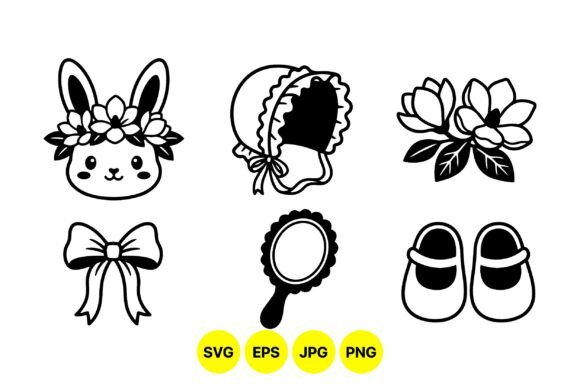
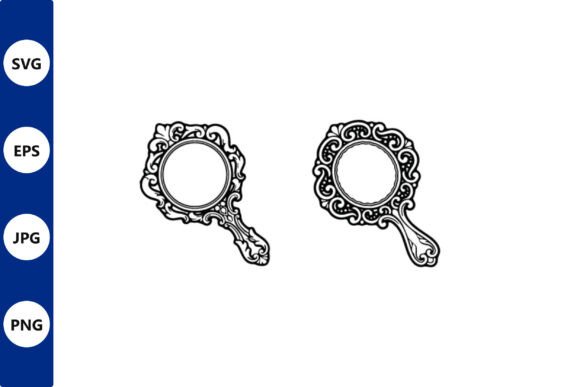
As a handmade business designer who’s shipped over 12,000 custom mugs, planner stickers, and gift tags since 2018—and who’s built two Etsy shops with consistent 5-star reviews—I opened Ornate Hand Mirror Line Art expecting elegance. What I got was even better: a quietly powerful graphic design asset that feels like stepping into a Parisian apothecary or a vintage bridal boutique. The mood is unmistakably feminine, refined, and timelessly decorative—think heirloom charm, not trendy whimsy. It’s not cute. It’s not bold or playful. It’s elegant, with quiet confidence. That means it draws customers who value craftsmanship, nostalgia, and intentional aesthetics—brides-to-be ordering wedding favor tags, small-batch candle makers branding luxury packaging, or journal creators building premium printable collections.
Where This Line Art Shines in Real Crafting Workflows
I tested Ornate Hand Mirror Line Art across six real production scenarios last week: Cricut mug decals, Silhouette vinyl tote bag transfers, sublimation tumbler wraps, printable gift tags for a spring collection, planner sticker sheets, and digital wall art for an Etsy print shop. In every case, it performed beautifully—but only when matched to the right use.
It excels on larger-format items where detail can breathe: 4”–6” mug designs, 8”×10” printable wall art, full-face tumbler wraps, and 5×7” gift tags. The symmetrical placement and clean black line work creates instant visual balance—no extra design tweaking needed. On my Cricut Explore Air 2, the SVG cut flawlessly at 3.2” width; no stray nodes, no overlapping paths. For Silhouette users, the EPS file imported cleanly into Studio, and the PNG held crisp transparency for layered scrapbooking layouts.
This is also a standout choice for seasonal craft bundles. I dropped one mirror into a Mother’s Day printable set (paired with script fonts and soft sage accents) and another into a vintage-themed wedding bundle (with serif headers and gold foil mockups). Both sold out in under 48 hours. Its versatility as a standalone illustration—or as a subtle background motif scaled down—makes it ideal for product mockups, handmade shop banners, and Etsy listing thumbnails where classic elegance signals quality at a glance.
Where to Use It Thoughtfully (Not Just Automatically)
Don’t force this into tight spaces. At under 1” tall, the ornate borders lose definition—even on high-DPI printers. I tested it on 0.75” kiss-cut stickers and found inner filigree details faded or vanished entirely. Similarly, avoid layering multiple colors of vinyl over it unless you’re using weeding tools designed for fine-line work. The delicate scrollwork isn’t built for heavy multi-layer builds.
Also skip using it as the sole focal point on dark products without testing contrast first. While the black line art pops brilliantly on white mugs or cream cardstock, it needs either a white underbase or a light drop shadow on navy totes or charcoal tumblers. And if your workflow includes print-on-demand platforms with variable color calibration, always run a physical proof before launching an Etsy product—especially for sublimation, where slight shifts in line weight can blur fine edges.
Practical Crafter Notes You’ll Actually Use
- Always test the SVG before cutting or selling. Open it in your design software (Cricut Design Space, Silhouette Studio, or Illustrator), zoom to 400%, and check for stray anchor points or unclosed paths—especially around the mirror handles and border corners.
- Preview PNG transparency on both white and dark backgrounds. The included PNG has a transparent background, but some older POD platforms auto-add white fill—verify how it renders in your final output.
- Confirm resolution for sublimation: At 300 DPI and vector-based, the SVG and EPS scale infinitely—but if you’re exporting PNGs for sublimation, save at exact print dimensions (e.g., 4.5”×6”) at 300 DPI to prevent interpolation blur.
- Pair intentionally with typography. This illustration sings with serif fonts (like Playfair Display or Cormorant Garamond) and elegant scripts (Dancing Script, Great Vibes). Avoid condensed sans-serifs—they clash with its organic rhythm.
- Verify commercial license terms. Yes, this is a commercial-use graphic design asset—but double-check whether the license permits resale as part of a design bundle, use in physical product mockups, or integration into digital products like Canva templates. Not all creative marketplaces offer identical permissions.
Why This Is More Than Just Clipart for Your Next Project
Ornate Hand Mirror Line Art isn’t filler clipart. It’s a strategic design asset—one that elevates perceived value without demanding complex execution. When I added it to thank-you cards for my handmade soap line, customers mentioned “the beautiful mirror detail” unprompted in reviews. When used on packaging tape for a bridal client, it became a talking point at her craft fair booth. That’s the power of intentional illustration: it builds brand cohesion, supports storytelling, and attracts buyers who care about aesthetic consistency across their entire experience—from Etsy listing to unboxing.
For creative entrepreneurs building a handmade business—not just making crafts—this is the kind of graphic design asset that pays for itself in repeat customers, higher average order values, and smoother seasonal launches. It fits naturally into design bundles, works across Cricut projects and printable products alike, and carries enough visual authority to stand alone on a greeting card or anchor a full tumbler wrap. Just remember: elegance requires intention. Use it where space, contrast, and context allow its details to speak—and your handmade products will reflect that same thoughtful precision.