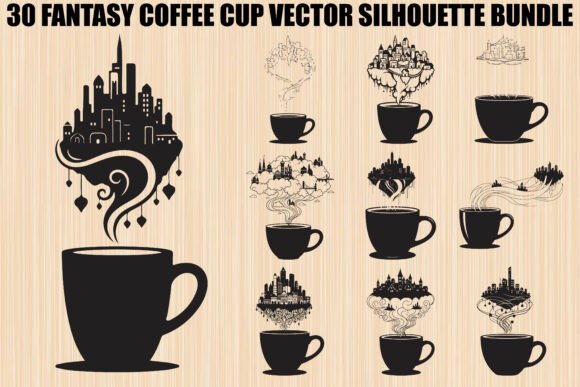
Fantasy Coffee Cup Bundle
First Impression: Whimsy That Stitches Well
Opening the Fantasy Coffee Cup Bundle feels like flipping through a sketchbook of quiet daydreams—30 silhouettes, each built around a clean coffee cup outline, with steam curling into tiny, intricate fantasy scenes: floating islands, miniature castles, sleeping dragons, starlit forests, even a tiny hot-air balloon drifting between curls. As an embroidery designer who’s stitched everything from baby onesies to boutique aprons, I immediately notice what this bundle *doesn’t* do: it doesn’t overwhelm. The shapes are bold enough for confident stitching but delicate enough to invite pause. It’s illustration-first—not clipart—and that makes all the difference when translating to thread.
A Real Project Test: Embroidering a Linen Tote for a Local Café
Last week, I used one design from the Fantasy Coffee Cup Bundle on a natural linen tote bag for a small-batch roaster launching a “Dream Brew” seasonal line. We chose a mid-sized cup silhouette (about 3.5" tall) with a crescent moon and tiny owls in the steam. On unbleached linen—medium weight, slightly textured—the design held up beautifully. The outer cup edge translated cleanly into satin stitch, while the steam details stayed legible using a mix of fill and running stitch. Customers loved the balance: recognizably coffee-related, but with enough personality to spark conversation. That’s the sweet spot—this isn’t just decoration; it’s storytelling you can hold in your hand.
Where It Shines in Real Embroidery Work
- Custom apparel: Works especially well on sweatshirts and relaxed-fit tees—clean outlines read clearly even at 4–5" width, and the steam motifs add charm without crowding.
- Tote bags & tea towels: The consistent silhouette scale across the bundle makes it easy to create cohesive sets. One cup with clouds, another with mountains—it feels intentional, not random.
- Baby embroidery & nursery decor: Soft fantasy themes (like sleeping stars or gentle mushrooms) translate well to onesies and pillow covers—no sharp edges or aggressive contrast, just warmth and wonder.
- Embroidered patches: Several designs have self-contained negative space and balanced density—ideal for turning into iron-on or sew-on patches for jackets or backpacks.
- Holiday and wedding gifts: A cup with holly sprigs or tiny doves reads festive without being literal. Great for personalized mugs (via heat-transfer mockups) or embroidered kitchen towels as bridal shower favors.
- Etsy listings & small shop branding: As digital embroidery files, these work seamlessly in printable mockups—clients instantly “see” how the design lives on real products, boosting trust and conversion.
Where to Proceed Thoughtfully
This isn’t a one-size-fits-all embroidery file. Its strength is also its nuance: those dreamy steam details demand attention in execution. On stretchy fabric like knits or thin cotton jersey, fine steam elements may blur without proper stabilizer—test with tear-away + light cut-away. On dark fabric, avoid ultra-light thread in the steam unless you’re layering underlay; subtle details vanish without contrast. For curved surfaces like caps, stick to the simpler cup variations—avoid designs where steam wraps tightly around the rim; distortion creeps in fast. And on tiny hoops (under 4"), skip the most detailed versions—prioritize clarity over intricacy.
How It Shapes Perception—Beyond the Stitch
Using Fantasy Coffee Cup Bundle doesn’t just add a motif—it shifts how people experience your handmade product. A plain black tote becomes memorable. A generic baby bib gains emotional resonance. That matters for Etsy sellers: buyers scroll past dozens of coffee-themed items daily, but one with a cup steaming a tiny galaxy? They stop. It signals care, creativity, and intention—not just production. For craft fairs or local boutiques, it supports brand consistency without locking you into one style; you can rotate designs seasonally while keeping the same warm, imaginative voice. And yes—it elevates perceived value. Customers pay more for pieces that feel *designed*, not dropped in.
Practical Designer Notes Before You Stitch
- Always test the design on scrap fabric matching your final project’s weight and texture—linen behaves differently than cotton poplin, which behaves differently than fleece.
- Check thread color contrast early: try your chosen steam motif in both dark and light thread against your base fabric in a simple black-and-white mockup.
- Review stitch density—some steam elements use tighter fills. If your machine hesitates or fabric puckers, consider simplifying or adjusting underlay in your embroidery software.
- Confirm hoop size compatibility: while most designs scale well, verify the largest version fits your standard hoop before digitizing for production.
- Inspect small corners and interior curves—do any steam lines taper too sharply? Those may need slight smoothing for reliable satin stitch.
- Use appropriate stabilizer: medium-weight cut-away for stable fabrics, lightweight tear-away for linens and towels, and fused + tear-away for knits.
- Verify licensing: since this is a Graphics bundle of Illustrations, confirm whether commercial use (e.g., selling finished embroidered totes or digital embroidery files) is permitted before listing.
Final Thought: A Design That Grows With Your Craft
The Fantasy Coffee Cup Bundle isn’t flashy—but it’s quietly versatile. It works for the hobbyist stitching her first patch, the Etsy seller building a themed collection, and the small shop owner refreshing seasonal merchandise. It invites interpretation rather than dictating it. And in embroidery, where every stitch carries weight and wear, that kind of thoughtful foundation matters most. Use it right—with attention to fabric, stabilizer, and intent—and it won’t just look good. It’ll feel like yours.