Brain Tree Knowledge Design Bundle: Graphics & Illustrations
As a graphic designer who’s built brand identities for handmade studios, launched print-on-demand collections, and crafted social media graphics for wellness coaches and educators, I recently evaluated the Brain Tree Knowledge Design Bundle for a real client project: a boutique mindfulness journal line launching on Etsy and in local indie bookshops. The goal? Visuals that whisper “thoughtful growth” — not clinical neuroscience or generic nature clichés. What I found wasn’t just clipart — it was a cohesive, mood-driven creative design system with quiet sophistication.
A First Impression That Sets the Tone
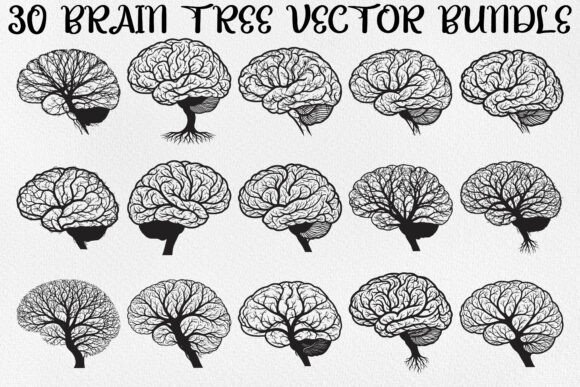
Opening the bundle feels like unboxing a sketchbook of symbolic stillness. These aren’t literal brain diagrams or cartoonish trees — they’re illustrations where organic dendritic lines echo cerebral folds, and root systems cradle subtle synaptic curves. The mood is calm, intentional, and quietly intelligent — perfect for brands rooted in learning, self-development, therapy, education, or slow-living craftsmanship. It leans into modern design without sacrificing warmth, making it ideal for small business branding that avoids cold minimalism or overused botanical tropes.
Where This Graphic Design Asset Truly Shines
In practice, the Brain Tree Knowledge Design Bundle excels in contexts where meaning and atmosphere matter more than literal representation:
- Packaging design — A single silhouette on a kraft journal cover or soy-ink tea box adds layered symbolism without clutter. Its organic flow complements hand-lettered typography beautifully.
- Printable design — As wall art for therapists’ offices or classroom resources, these scale flawlessly from 8×10 PDFs to large-format posters. The vector-based nature ensures crisp sublimation design for mugs and tote bags.
- Social media graphics — Used as decorative accents behind quote overlays (Instagram posts, Pinterest pins), they create visual rhythm while reinforcing brand themes of growth and insight.
- Cricut project and sticker design — Clean SVG paths cut precisely on vinyl; the open negative space prevents weeding nightmares. Ideal for affirmation stickers or planner inserts.
- Editorial design — In digital newsletters or blog visuals for coaching brands, these serve as elegant section dividers or chapter headers — adding depth without competing with text.
- Canva template customization — Drop any silhouette into branded templates as consistent visual anchors across email headers, webinar slides, or course workbooks.
Real-World Use Cases That Just Work
For our mindfulness journal launch, we used one central Brain Tree motif as the spine motif on printed notebooks, then adapted simplified versions as watermark-style backgrounds for downloadable worksheets. On product mockups, it elevated plain white mugs into thoughtful keepsakes — no extra illustration needed. As part of a seasonal campaign (“Rooted in Learning”), the bundle provided cohesive assets across Instagram carousels, printable calendars, and limited-edition sticker sheets — all unified by shared visual DNA. That consistency builds recognition faster than mismatched stock illustrations ever could.
Where to Apply Caution — Not Every Project Fits
This isn’t a universal toolkit. The Brain Tree Knowledge Design Bundle can feel too evocative — or too intricate — for certain contexts:
- Logo design: Avoid using full silhouettes as primary logos. Their detail doesn’t translate to favicon size or embroidery. Better as a supporting icon or pattern element.
- Minimalist branding: If your client demands razor-thin sans-serif precision (think fintech or luxury skincare), these may read as “too soft” or “overly metaphorical.”
- Crowded layouts: Placed next to dense infographics or busy photo collages, the fine branching details risk visual noise. Reserve them for breathing room — hero graphics, margins, or standalone decorative accents.
- Low-contrast environments: Some silhouettes have delicate inner linework. Test rigorously on both light and dark backgrounds — especially for web design or digital ads.
Designer Notes You Can’t Skip Before Client Use
Before dropping this into a live project, I always run these checks:
- Test in black and white — Does the silhouette retain its clarity without color cues? (It does — a major strength.)
- Preview at actual sizes — Zoom out to 25% in Illustrator. Does the core shape remain legible? (Yes — even at 16px height in UI contexts.)
- Place on real mockups — Not just flat previews. Try it on textured paper, ceramic, fabric — see how subtlety holds up in physical form.
- Verify file formats — Confirm SVG editability (paths are clean, no raster embeds) and PNG transparency (crisp edges, no fringing).
- Font pairing test — Run trials against serif (e.g., Playfair Display), sans (e.g., Inter), script (e.g., Pacifico), and display fonts. It harmonizes best with humanist sans and gentle serifs — avoid ultra-bold or monospaced styles.
- Commercial license review — Double-check usage rights for your client’s context: print-on-demand, SaaS dashboards, or physical merchandise. This bundle includes broad commercial license — critical for Etsy product or digital seller use.
Final Verdict: A Thoughtful Addition to Your Design Assets
The Brain Tree Knowledge Design Bundle isn’t flashy — and that’s its power. In an era of oversaturated design bundles, it delivers quiet confidence. It supports emotional resonance without sacrificing professionalism. For creative marketplace sellers, handmade business owners, content creators building authority, and designers crafting meaningful packaging or editorial experiences, it’s a rare find: a graphic design asset that enhances visual hierarchy through suggestion, not saturation. When your client needs to communicate wisdom, growth, and grounded curiosity — not just decoration — this bundle earns its place in the working toolkit.